


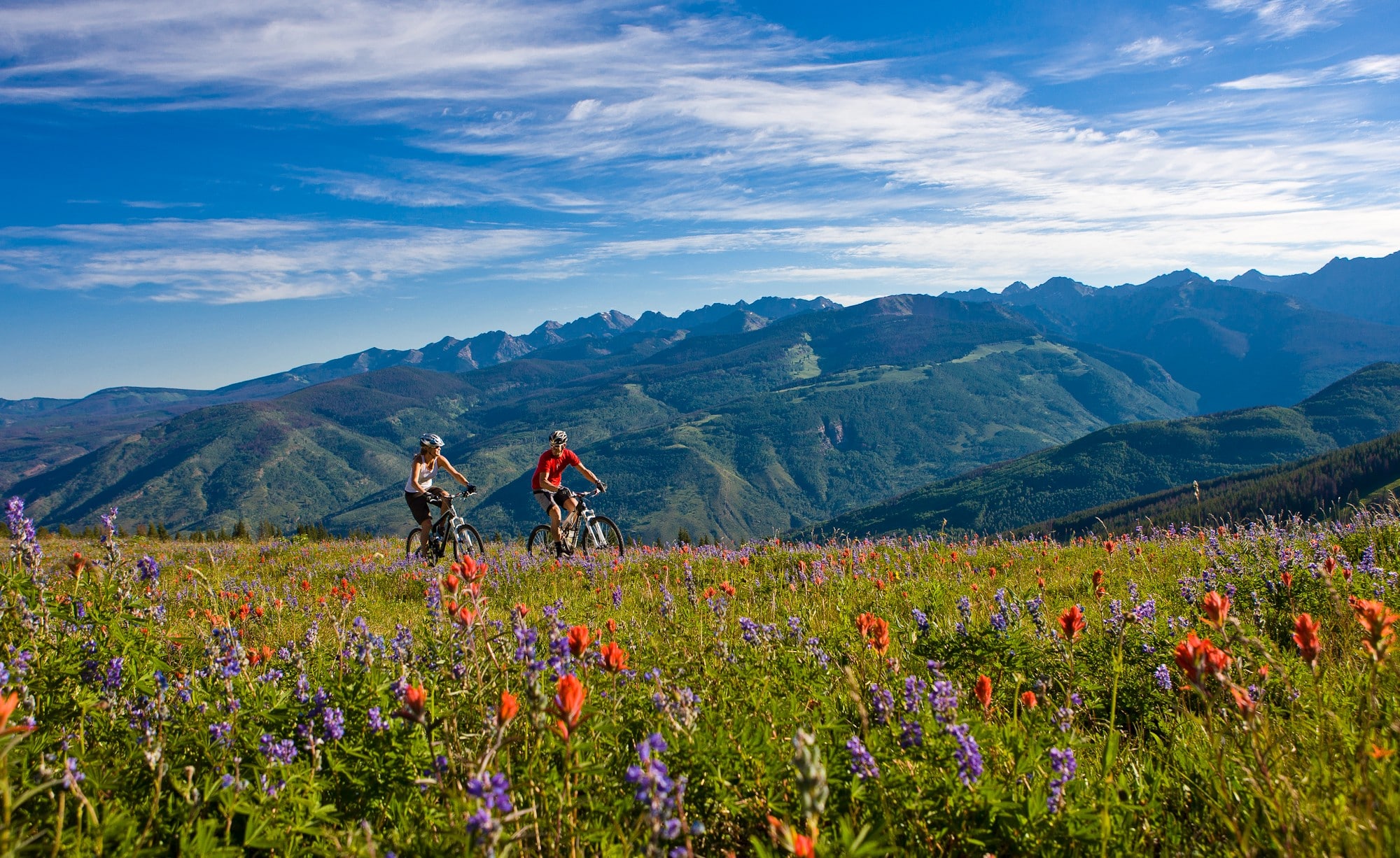

Vail’s mountain-bike trails cover everything from paved paths along Gore Creek to high-alpine singletrack off the scenic gondola. Some rides are easy and close to the villages and others climb into the trees or descend 2,000 feet from a summit. Whether you’re new to the sport, looking for rentals and green runs or an experienced mountain biker seeking something more rocky and technical, there are plenty of routes to choose from.
Pro tip: Have fun, be safe and remember to heed the Vail Village bike-dismount zones — areas designated for foot traffic only.
- Vail Mountain-Bike Trails
- Flat & Paved Bike Trails
- Bike Rentals in Vail
- What to Wear
- What to Bring
- FAQs
Vail Mountain-Bike Trails
Vail’s bike-trail system spans a wide range of terrain and elevation — with options for beginner, intermediate and advanced riders. Below, trails are grouped by difficulty to help you find the perfect place to start, whether you’re planning a short, easy ride or something longer and more rugged.
Easy Trails
- Avanti Lane: 0.7 miles, minimal elevation gain. Enjoy a smooth, wide singletrack that connects the base area to nearby green routes.
- Lucy’s Loop: 1.9 miles, with about 150 feet of gentle climbing. This is a beginner-friendly loop with wide corners and gradual slopes.
- Golden Gate: 2.3 miles, 954 feet of descent and minimal climbing. It’s a smooth, fast trail with a friendly grade that’s ideal for riders gaining confidence on longer descents.
Intermediate Trails
- Lion Down: 4.2 miles, with 1,452 feet of descent and just 29 feet of climbing. This is a long, scenic downhill route on a wide dirt road, best suited for newer riders looking for an easier way down from the top of the mountain.
- Big Mamba: 3 miles, with 1,274 feet of descent. It’s a flowing intermediate trail that runs under the gondola, weaving through ski runs and aspen stands. Features include some natural roots and rocks, and consistent downhill momentum from top to bottom.
- Sidekick: 1.8 miles, with 844 feet of descent and a few short climbs. Experience a lower-mountain trail built for early intermediate riders with a steady grade. It flows through open woods and links to Golden Gate for a longer ride down to the base.
Advanced Trails
- Hank’s Hideaway: 2 miles, with 725 feet of descent and about 85 feet of climbing. This is a mellow, narrow trail that drops through aspen forests. Expect roots, ruts and some slower-speed terrain.
- Grand Traverse: 12.7 miles, with 1,226 feet of climbing and descent. Ride a loop that winds from the gondola through wildflower meadows and pine forests. Long, steady climbs and fast singletrack make it a solid option for experienced riders looking for big views and mileage.
- Mane Lane: 0.7 miles, with 592 feet of descent. It starts fast and technical with tight turns through aspen stands, then shifts quickly into steep, eroded terrain with loose rock and exposed roots. Most riders exit before the final chute.
Pro Tip: Be sure to purchase a lift ticket or bike-haul pass to access Vail Mountain’s base area.

Flat & Paved Bike Trails
Not every bike ride in Vail has to head up to the mountains in Vail. The aspen-studded valley is lined with paved paths that follow the river, connect the villages and climb toward the pass. These routes are great for visitors who want time on a bike without committing to singletrack.
- Gore Creek Recreation Trail: 15 miles, mostly flat with gentle rolling sections. Explore a paved path that runs from East Vail to West Vail and beyond, following the creek. It’s ideal for beginners, families, and anyone looking for a relaxed ride with easy access to shops and restaurants along the way.
- Vail Pass Bike Path: 14 miles, with 1,500 feet of climbing on the way up. This paved route parallels I-70 and connects Vail to Copper. Rated difficult uphill and intermediate downhill, it rewards the effort with panoramic views at the summit.

Bike Rentals in Vail
Bringing your own bike is optional, because Vail has plenty of bike-rental shops that make it easy to gear up for the day. You’ll find full-day and half-day rentals across town, with pickup locations near trailheads, bike paths and gondola access points. Most rental packages include a helmet — and shops typically carry sizes for adults and kids. Local staff can help match you with the right wheels and gear for your route and skill level.
- Downhill Mountain Bikes: If zooming down the mountain is your goal, then a downhill bike is probably the best fit. They are heavier full-suspension mountain bikes, so they’re not ideal for uphill climbs.
- Trail Bikes: Pedaling up the mountain is pretty different than zooming down it, and the upward ride is handled easier aboard a trail bike. This is a lightweight, full suspension bike — a must for comfort over bumpy, rocky trails.
- Cross-Country Bike: If you want to climb the mountain, this is the bike for you. Cross-country bikes are lightweight and made for technical terrain. The cross-country bike has thinner tires for a faster uphill, while the trail bike has thicker tires made for rougher terrain.
- All-Mountain/Enduro Bike: All-Mountain bikes can be ridden all over the mountain, whether you want intense uphill rides or a fast descent downhill.
- E-Bike: Electric-powered bikes add some ease to the ride with a pedal-assist feature. You can adjust the power based on how much assistance you want while riding — it’s great for people who are still building up their endurance.
- Kids Bikes, Tag-Alongs & Trailers: The kiddos can come along for the ride, too. Kids’ trail bikes and path bikes are available, as well as tag-alongs and trailers. Tag-alongs and trailers are attachments that fit on the back of an adult bike and let the little ones ride behind you.

What to Wear Mountain Biking
Bike clothing is designed to bring the most comfort and protection to the rider. Even if you don’t invest in apparel designed specifically for biking, opt for lightweight clothing and lighter colors. Lightweight materials let the air flow through to release heat and lighter colors reflect sunlight.
- Bike Shorts: Two main features of bike shorts are stretchy fabric so you can move with ease and a padded seat liner for comfort and reduced friction. The more rugged the terrain, the longer and thicker your bike shorts should be.
- Bike Shirt: Also known as bike jerseys, bike shirts are often equipped with moisture-wicking fabric, back pockets for stashing small items, front zippers that open to cool down and collars that block your neck from the sun.
- Bike Socks: Skip the fuzzy wool and opt for socks made from nylon or polyester — both help prevent blisters and excess moisture.
- Bike Gloves: Sweaty palms can make for slippery handlebars. Choose a pair of fingerless gloves for summer riding along smooth terrain. You may want gloves with fingers for more protection if exploring rugged trails.
- Bike Shoes: Opt for shoes that stay stable on the pedal without slipping around. Don’t forget you could be hoofing it if you need to walk your bike for any reason, so choose kicks with good traction.
- Layers: Since summer temperatures in Vail fluctuate from the mid-70s in the day to the 40s at night, you may want to bring along a hoodie, a jacket or a thicker, long-sleeved shirt if you’re out early or late.

What to Bring Mountain Biking in Vail
Before you embark on your ride, you’ll want to pack a biking bag or small backpack stocked with essentials. These include:
- Lots of water
- Easy-to-eat snacks, like nuts, granola or protein bars
- Sun protection like sunscreen and sunglasses
- Cell phone
- Area map of where you’re heading
- Rain poncho
- Helmet
- If you’re heading to rough terrain, bring along elbow pads and other protective gear.